The Real Size of the Dinosaur-Killing Asteroid Will Blow Your Mind 🔥
Hey everyone! I was scrolling through Reddit the other day and this topic was gaining tons of attention – and honestly, I totally understand why. We’ve all heard that an asteroid wiped out the dinosaurs, but when I actually looked into how massive this thing was… well, let’s just say my jaw dropped. I had to share this with you all because the size comparisons are absolutely wild!
Wait, How Big Was This Thing Really?
So we’re talking about the asteroid that killed dinosaurs – that infamous space rock that ended the reign of the dinosaurs 66 million years ago. When I first heard about it, I imagined something maybe the size of a mountain, but the actual numbers are even crazier.
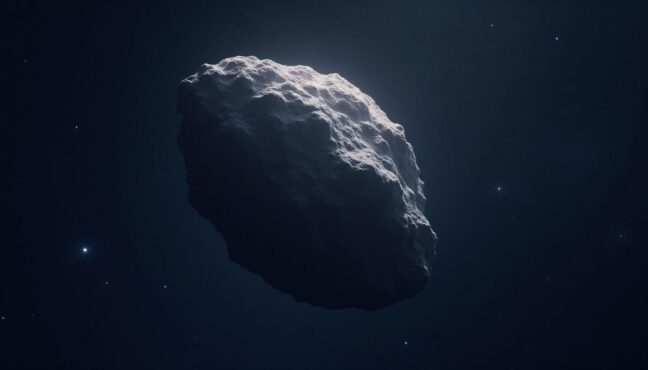
This cosmic destroyer was approximately 10-15 kilometers (6-9 miles) in diameter. Now, I know numbers can be hard to visualize, so let me break this down with some comparisons that’ll make your head spin.
Mind-Blowing Size Comparisons 🤯
Comparison #1: The Area of Manhattan
Okay, first up – imagine the entire island of Manhattan. The skyscrapers, Central Park, all of it. The asteroid had a surface area roughly twice the size of Manhattan! Can you imagine something that massive hurtling through space at insane speeds? It really puts things into perspective!
Comparison #2: Wider Than Mount Everest
Here’s another one that blew my mind – Mount Everest, the tallest mountain on Earth, stands at around 8.85 km (5.5 miles) tall. That means our dinosaur-killer was wider than Everest is tall! Think about that for a second – a space rock bigger across than the world’s highest mountain. No wonder it caused so much destruction.
Comparison #3: It Was Planetary-Sized
For my space nerds out there – the asteroid was comparable in diameter to Deimos, one of Mars’ moons! Deimos measures about 12.5 km across, putting it right in the same ballpark as our extinction-event causer. So basically, Earth got hit by something the size of a small moon.
The Impact Was Even More Terrifying 💥
Now, size is one thing, but the sheer force of this impact is where things get really insane. This thing was traveling at approximately 20 kilometers (12.5 miles) per second – that’s 72,000 km/h or 44,738 mph! To put that in perspective, that’s about 20 times faster than a typical high-powered rifle bullet.
The asteroid impact created the Chicxulub crater in Mexico, which is estimated to be about 180-200 kilometers (110-120 miles) in diameter and 30 kilometers (19 miles) deep. That’s big enough to swallow multiple cities whole!
But here’s the real kicker – the explosion was equivalent to 100 million megatons of TNT. I know, numbers that big are hard to comprehend, but trust me – that’s more powerful than every nuclear weapon on Earth combined, times thousands. The energy released was absolutely unimaginable.
The Aftermath: Why It Wiped Out 75% of Life
This catastrophic impact caused what scientists call the Cretaceous-Paleogene extinction event. The immediate effects were bad enough – massive tsunamis, global wildfires – but the real killer was what came after.
The impact threw so much debris into the atmosphere that it created a ‘nuclear winter’ effect, blocking most sunlight for up to 1-3 years with severe environmental effects lasting much longer. Plants died, food chains collapsed, and 75% of all plant and animal species on Earth perished, including all non-avian dinosaurs.

Where Is the Asteroid Now?
This is something I was really curious about – what happened to the asteroid itself? Well, here’s the crazy part: the asteroid vaporized on impact. Poof! Gone! But fragments were scattered worldwide as part of the geological layer marking the extinction event. So technically, tiny pieces of dinosaur-killer are all around us.
Your Burning Questions Answered 🙋♀️
Could something like this happen again?
While asteroid impacts are always a possibility, NASA and other space agencies are actively monitoring near-Earth objects. The good news is that we’d likely detect something this size well in advance these days!
Why did birds survive when other dinosaurs didn’t?
This is one of those fascinating evolutionary questions! Scientists believe birds survived because they were smaller, could fly to find food, and some species could eat seeds that survived the catastrophe.
How do we know all this happened 66 million years ago?
The evidence is in the geological record – there’s a distinct layer of rock worldwide that contains iridium (rare on Earth but common in asteroids) and other impact evidence that dates to exactly this time period.
What was the world like right after the impact?
It would have been apocalyptic – dark, cold, with acid rain and widespread fires. The recovery took millions of years, but it ultimately paved the way for mammals (and eventually humans) to thrive.
Final Thoughts: Perspective Is Everything 🌍
Learning about the dinosaur extinction event really puts things in perspective for me. We worry about so many daily stresses, but then I remember that our entire planet has faced catastrophes on this scale and still recovered in amazing ways.
The fact that we can piece together what happened 66 million years ago from geological evidence is just incredible. It shows how resilient life is, and how even the most devastating events can eventually lead to new beginnings.
So next time you’re feeling stressed about, well, anything – remember that we’re living on a planet that survived being hit by a space rock wider than Mount Everest traveling at 44,738 mph. Pretty puts things in perspective, doesn’t it?
What comparison blew your mind the most? Let me know in the comments – I’m still not over the Mount Everest comparison myself! 👇